
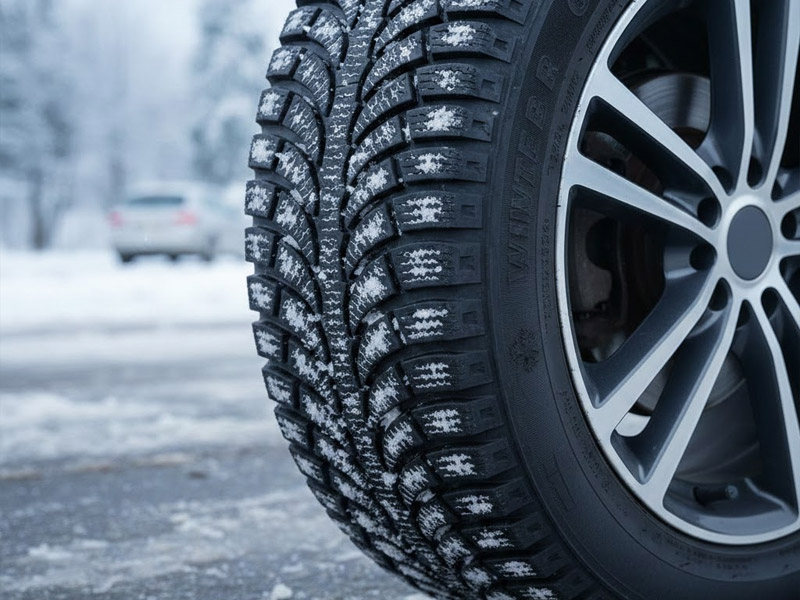
Winter tyres aren’t just another set of wheels—they’re a safety upgrade. Their rubber compound stays softer in cold weather, and their tread pattern i
Winter tyres aren’t just another set of wheels—they’re a safety upgrade. Their rubber compound stays softer in cold weather, and their tread pattern is designed to grip snow, slush, and ice. But that specialised design also means they can wear out faster if they’re mistreated.
Here’s a complete guide on how to protect your winter tyres so they last longer, perform better, and save you money.
1) Put Winter Tyres On at the Right Time (Not Too Early)
One of the fastest ways to destroy winter tyres is using them when it’s too warm.
Winter tyres are made with a softer rubber compound that performs best in cold temperatures (generally below 7°C / 45°F). When driven in warmer weather, the rubber wears down quickly—especially on dry asphalt.
Best practice:
-
Install winter tyres when temperatures consistently drop below 7°C
-
Switch back to summer/all-season tyres once temperatures rise again
This alone can add months of usable life.
2) Maintain Correct Tyre Pressure (Especially in Cold Weather)
Cold air reduces tyre pressure. Underinflated tyres create more rolling resistance, heat, and uneven wear—especially on the shoulders (outer edges).
How to protect them:
-
Check pressure at least every 2 weeks
-
Always check when tyres are cold (before driving)
-
Inflate to the vehicle manufacturer’s recommended PSI (door sticker)
Tip: Every 10°C drop in temperature can reduce pressure by roughly 1–2 PSI.
3) Rotate Your Tyres Regularly
Winter driving often involves more steering corrections, braking, and uneven traction, which can wear tyres unevenly—especially front tyres on front-wheel-drive cars.
Rotation schedule:
-
Every 8,000–10,000 km (or every 5,000–6,000 miles)
-
Also rotate immediately if you notice uneven wear
Regular rotation keeps tread wear balanced and preserves winter grip longer.
4) Avoid Aggressive Driving (Winter Tyres Wear Fast When Spun)
Winter tyres grip well, but their soft compound means they wear quickly when abused.
What kills them:
-
Hard acceleration (spinning on ice or slush)
-
Sudden braking
-
Fast cornering
-
Burnouts (even short ones)
-
Wheel spin while stuck
Drive smoothly:
-
Gentle throttle
-
Anticipate stops early
-
Slow into corners
-
Avoid spinning tyres while trying to free the car (use traction aids instead)
5) Get a Wheel Alignment Check Every Winter Season
Alignment problems can silently destroy winter tyres. Even a small misalignment will cause the tread to wear unevenly—often long before the tyre is “finished.”
You likely need alignment if:
-
Car pulls to one side
-
Steering wheel is off-centre
-
Tyres show uneven wear patterns
One alignment check per winter season can significantly extend tyre life.
6) Don’t Mix Different Tyres
Mixing winter tyres with all-season or summer tyres causes uneven handling, traction loss, and uneven wear.
For best safety and durability:
-
Always use four winter tyres
-
Prefer matching brand/model and similar tread depth
If you must replace only two, install the new pair on the rear axle for stability—but ideally replace all four if there’s a large tread difference.
7) Keep Your Tyres Clean (Salt and Chemicals Matter)
Winter roads often contain:
-
salt
-
brine solution
-
grit
-
chemicals
These can damage wheels and contribute to tyre rubber degradation over time.
How to protect them:
-
Rinse tyres and wheels occasionally
-
Wash the underbody if possible
-
Clean especially after driving in heavy salt conditions
This won’t just protect tyres—it also prevents rim corrosion.
8) Protect Tread Depth — It’s the Whole Point of Winter Tyres
Winter tyres rely heavily on deep tread and sipes (tiny cuts in the tread blocks). As tread depth decreases, snow/ice performance drops dramatically.
Minimum tread depth recommendations:
-
Legal limit may be 1.6 mm, but that’s not safe for winter tyres
-
For winter performance, replace at around:
-
4 mm (many experts consider this the practical minimum)
-
To protect tread depth:
-
avoid unnecessary driving in dry warm conditions
-
don’t accelerate harshly
-
keep pressure correct
9) Store Winter Tyres Properly in the Off-Season
Storage is one of the most overlooked factors in tyre lifespan. Poor storage can cause cracking, hardening, and deformation.
Ideal storage conditions
-
Cool, dry, and dark place
-
Away from:
-
sunlight (UV)
-
heaters
-
electric motors (ozone exposure)
-
chemicals and solvents
-
Storage method
-
Mounted on rims?
-
Store stacked horizontally, or hung on wall hooks
-
-
Not mounted?
-
Store standing upright and rotate position every few weeks
-
Use tyre bags
Tyre storage bags reduce exposure to oxygen and ozone (both accelerate rubber ageing).
10) Mark Tyre Positions Before Removal
Before storing, label each tyre:
-
Front Left (FL)
-
Front Right (FR)
-
Rear Left (RL)
-
Rear Right (RR)
This helps you rotate logically next season and prevents uneven wear.
11) Avoid Overloading Your Vehicle
Extra load puts more stress on tyres and increases wear, particularly in winter when roads are rougher and traction varies.
If carrying heavy loads:
-
adjust tyre pressure to “loaded” settings (if the manufacturer recommends this)
-
drive slower to reduce heat and abrasion
12) Watch for Early Damage and Fix Issues Quickly
Winter roads are full of potholes, ice chunks, and debris.
Check your winter tyres regularly for:
-
cuts
-
bulges (sidewall damage)
-
embedded stones
-
cracks
-
uneven wear
If caught early, you may save the tyre—or at least avoid a dangerous failure.
Quick Winter Tyre Protection Checklist
✅ Install when temps are consistently below 7°C
✅ Remove once temps rise above 7°C
✅ Check pressure every 2 weeks
✅ Rotate every 8k–10k km
✅ Align annually or if handling changes
✅ Clean off road salt occasionally
✅ Store in a dark, cool, dry location
✅ Replace when tread drops near 4 mm
Final Thoughts
The key to making winter tyres last longer is understanding what they’re designed for: cold weather and slippery roads—not warm dry pavement and aggressive driving. With correct pressure, regular rotation, good storage, and smooth driving habits, winter tyres can last several seasons while keeping your winter grip strong.

COMMENTS